
 Find a branch
 Contact
 Help
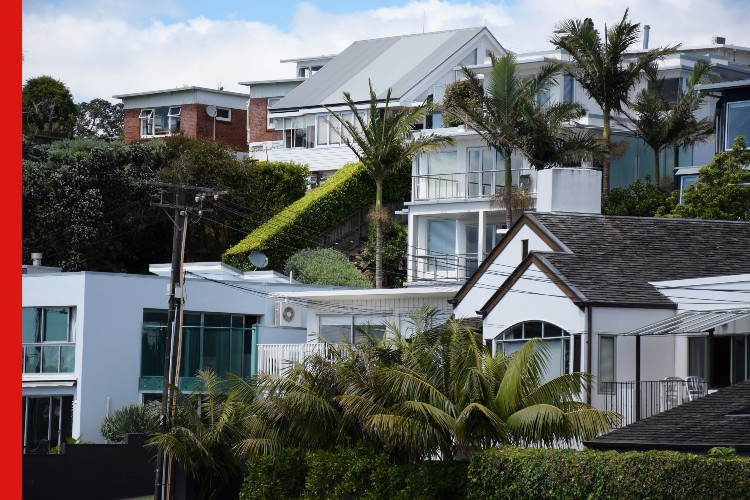
Auckland housing has become more affordable compared with cities offshore.
Auckland has at last shrugged off its most unwanted housing title – that of being among the world’s least affordable cities in which to buy a home on a price versus income basis.
In the latest Dermographia International Housing report, published in June, Auckland was ranked in 14th equal place, alongside Miami, for the least affordable housing. It is the third consecutive year it has hovered between 14th and 16th place.
Holding unwanted first place in 2026 was Hong Kong, followed by Sydney and California’s San Jose.
Auckland’s latest ranking is a far cry from of its previous rankings, slipping from an all-time high of 4th in 2020.
It now trails all of Australia’s big five cities – Sydney (second), Adelaide (fourth), Brisbane (eighth) Melbourne (nineth) and Perth (thirteenth)*.
This slip in the “notoriety table” for Auckland is just another reminder that from a price perspective the country’s housing market has edged back steeply towards affordability.
Prices have now found stability around current prices. The September REINZ housing data had the Auckland median sales price at $950,000 and the national median price (including Auckland) at $755,000.
There was no silver bullet that has led to prices declining.
My perspective is that the real triggers for prices starting to fall initially was the combination of mortgage interest rates starting to increase, which put pressure on repayments levels, combined with tighter restrictions on the amount of money that people could borrow.
Combined, they reduced the numbers competing for homes and provided the initial hand brake on prices continuing to escalate.
Coming quickly on the heel of loss of momentum was a combination of a significant increase in housing supply, slower population growth and tougher economic conditions.
End result has been that for the past two years prices have remained stable while sales numbers have remained at a level which has seen activity tick over.
Treasury’s most recent forecast for housing price growth does not see the situation changing anytime soon, with prices likely increasing cumulatively by only 11% by mid-2030.
Such significant reversals in prices produces winners and losers – the losers being those who bought at peak price and subsequently have needed or decided to sell. Based on data published by Cotality, that number may be around 13% of vendors over the past 12-month period.
It also means 87% of vendors have broken even or made a gain over the price they paid.
Other winners have been first time buyers, with Cotality putting first time buyers as representing 29% of all current buyers. Compared to their predecessors of 2020 and 2021, the current cohort of first-time buyers have bought well.
We have undoubtedly entered a new phase in terms of housing and a return to runaway housing prices in the foreseeable future is highly unlikely.
In part it is because most homes being built in our urban centres are terraced housing, tower blocks, or apartments as opposed to stand alone dwellings. In increasing the density of housing on a given piece of land, the cost of building that house is far less than it would otherwise have been.
End result from a price perspective is that while housing will continue to rise, the rise will be gradual and in line with economic growth and background inflation.
History tells us that every so often supply and demand gets out of balance, and no doubt that will happen again some time in the future. But for the foreseeable future we are likely to see stable housing market prices.
*Since publication, the Australian market has seen significant price falls.