
 Find a branch
 Contact
 Help
Help
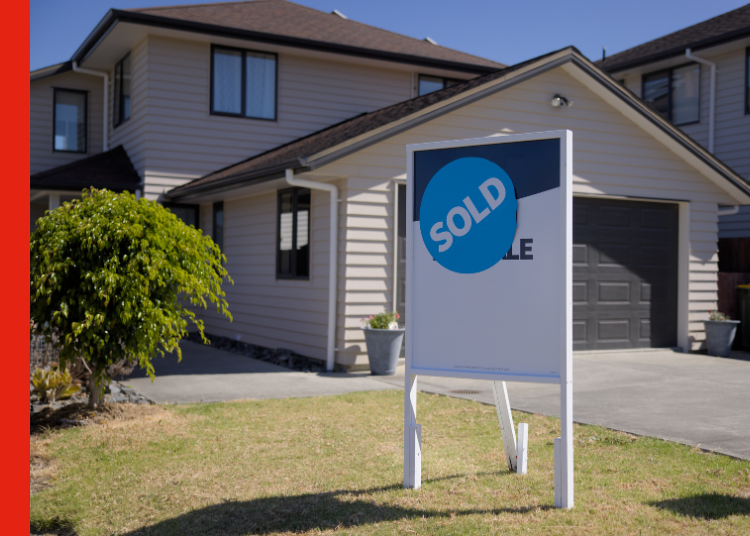
OPINION: The Reserve Bank has flagged that the housing market may be on the cusp of fundamental structural change. What is that change, and what does it mean for house prices?
The change is that housing supply may be on the verge of meeting demand or possibly exceeding it. And if that is the case, it suggests that low mortgage interest rates may no longer be the ‘price kicker’ they have been for the past three decades.
The Reserve Bank raised this as a possibility in February when answering questions as to its views on house prices at Parliament’s finance and expenditure committee, following the release of the statement confirming that the OCR would remain at 2.25%.
It was contained in the answer the Bank’s Chief Economist, Paul Conway, gave when asked whether the Bank stood by its previous position that the Government’s tax changes would add inflationary pressure to the economy.
He said that the Bank had since “softened” that view. Within his answer he then went on to talk about the possible “weakening” of the “wealth effect”.
Essentially, the wealth effect is the feeling homeowners have when the value of their house continually increases, which leads to greater spending and borrowing against the value of the house.
The Bank said that over the past decade the country had got better at building houses and there had been changes to zoning restrictions, and this was having an impact.
In the past, when housing supply had been “sticky”, lower interest rates had led to demand for housing increasing, and this then translated into price increases. Now, if the supply side is more free to respond, an increase in demand for houses will generate more construction activity.
“This is a welcome development”.
The Bank said it was a little too early to say that a structural change was underway “but it may well be the case”.
The change in the market that the Reserve Bank alludes to can be seen clearly in the number of homes for sale in Auckland at present.
At the start of each month for the past 12 months, we have had between 5,500 and 6,000 homes for sale. When prices peaked in 2021 the number of homes for sale at the start of each month would have been some 50% lower in the mid-3,000s.
You have to go back more than a decade to find a period when we could offer buyers such a large choice of properties.
Should this become embedded, it will be welcomed by the housing profession. A stable, active market, with prices increasing modestly over time, is in the best interests of all – vendors, buyers, the economy and those in the profession.
While individuals vendors can benefit from runaway prices, ultimately the main purpose of a house is for it to be a place that is the owner’s home. One person’s gain becomes another’s loss as they are shut out of being able to afford their first home, or take on unsustainable debt.
If our housing market is to go through a phase where the wealth effect is less of a factor than at present, it will be interesting to see whether the Reserve Bank also rolls back those restraints such as restrictions on banks as to deposit levels, debt to income ratios and loan to value ratios designed to reign in prices.
As an aside, the Reserve Bank’s overview of where house prices are going in short term is positive. It sees an end to the current price hiatus and expects ‘gradual increases’ over 2026, and then growth at around the rate of household income over the medium term.
It would appear that that housing and the economy will be lifted out of its hiatus this year.