
 Find a branch
 Contact
 Help
Help
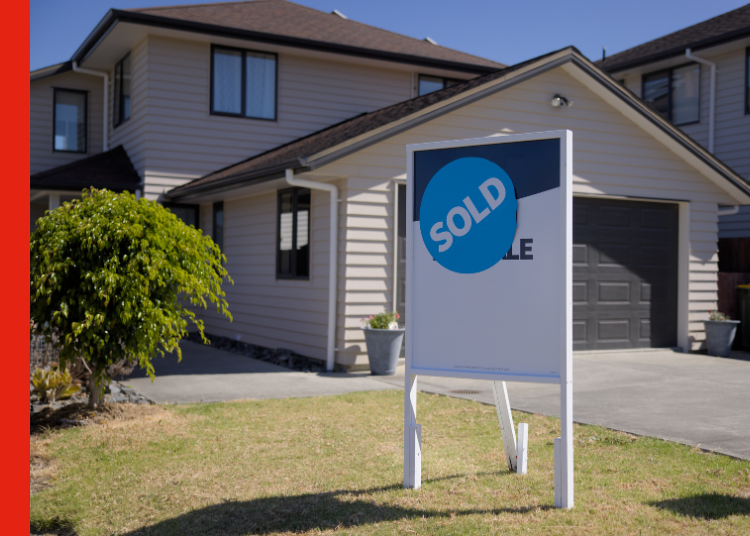
How much stock should you place in those online home valuation sites?
A house's worth generally depends on its location, size, and basic features. That’s what an online valuation calculator uses to figure out what it's worth, alongside council information and sales of similar houses.
But these online valuations can be inaccurate, which has the potential to cause frustration for both buyers and sellers. There are several reasons for these inaccuracies:
First, the online tools don’t see inside your house. A house might be in perfect condition or extremely run-down - the computer model can't tell that.
Second, sales data is based on settled sales, and it usually takes around three months to settle once the price is agreed. Sometimes the market can move in three months, so the data becomes out of date. Council Valuations (CVs) are also a big data point and these can move around or be out of date too.
Third, humans aren’t always rational – we often buy houses based on emotion, resulting in prices driven up by FOMO or bidding wars. Even registered valuers can provide very different prices for individual homes. There’s no way to be certain about what a specific house will sell for, because people are unpredictable.
Why is my home valuation wrong?
Your online valuation is more likely to be off the mark if:
· Your home is unique or unusual compared to nearby houses. For instance, it might be very large, designed by a famous architect, or include a minor dwelling. You’ll get a more accurate valuation if your property is similar to the neighbours’ - an apartment, one of a block of townhouses, or part of a relatively new subdivision.
· There haven’t been many sales in your suburb recently or there aren’t many houses in your area. This means the algorithm doesn’t have much recent data to draw on. Lots of sales means more data, which leads to greater accuracy.
· The market is moving fast, so prices are changing before settled sales prices catch up. This can go in either direction, but it’s more common in a hot market. A flat market like we’ve had recently gives more accurate prices.
· You’ve added features but the online valuation tool is not aware of them. An extra bedroom, for example, won’t be recognised by the online tools until the council updates its records.
How far off could my online valuation be?
Online valuation tools use the same information, so they tend to produce clustered results. Homes.co.nz provides useful data on its accuracy. Small areas have lower accuracy, with a median error rate of up to 14% (November 2025).
Accuracy is higher in the cities, but higher prices also mean that small inaccuracies by percentage are more significant in actual dollars. In Auckland, the median error is around 6%, which on a median house worth $1 million means your online valuation could range from $940,000 to $1,060,000.
In most districts, at least 80% of valuations are within 20% of the sale price, but that’s still a lot of wriggle room. That reflects the complexity of accurately pricing any individual home.
Get to know your market for the most accurate pricing
The best way to accurately price a house is to understand your local market. By viewing homes and then tracking their sale price, you will soon start to get a feel for what makes a house appealing to buyers and what direction prices are trending.
That will give you the extra information to more accurately price your own offer on a house, or know what your home will likely sell for.