
 Find a branch
 Contact
 Help
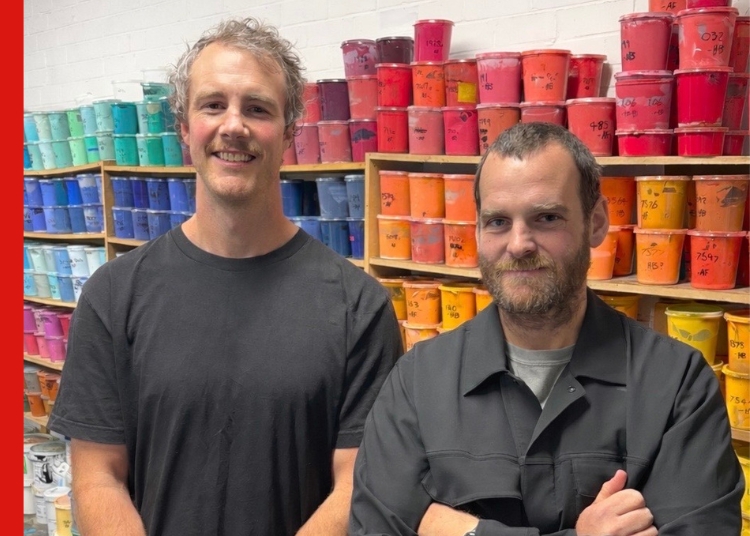
The Print Room owners Chris Brun and Jon Thom
Thirteen years ago, when Jon Thom and Chris Brun launched their first clothing label Moodie Tuesday, neither had printed a T-shirt before.
That minor detail didn’t stop them talking their way into an order for 2,000 Speight’s O-Week shirts, alongside another 2,000 or so for the Otago University Students’ Association and a Dunedin student bar.
Their original printing press was assembled from nuts, bolts, hinges and springs bought from the Mitre 10 across the road. The first shirts were, by Jon Thom’s own admission, terrible. But they were good enough to convince a few customers that the pair knew what they were doing.
When the big orders landed, theory quickly became reality. With limited funds, they split the cost of basic printing equipment across their parents’ credit cards, then spent seven days virtually living inside an old South Dunedin car garage to get the job done. They slept in a cupboard on the mezzanine and survived partly on food left by the bakery next door.
“It sounds real grim,” Chris says. Although, he adds, it was mainly convenient not having to leave the factory.
The gamble paid off. The shirts were delivered on time and the customer was impressed by an operation that, behind the scenes, was still being figured out. As Jon puts it: “Sometimes you can sort of fake it and make it.”
More than a decade later, plenty has changed.
Moodie Tuesday gradually gave way to The Print Room, as Jon and Chris realised the bigger opportunity was not in selling their own garments one at a time, but in designing, printing, and producing merchandise for other organisations.
The transition was gradual, with the two businesses running alongside each other for a period. Moodie Tuesday still has a nostalgic following among some Dunedin locals, and the founders occasionally get requests to bring it back. But Jon says the economics of running a small clothing label were difficult. The Print Room offered a more sustainable future, while still giving the pair an outlet for their design instincts.
Today, The Print Room produces clothing and merchandise for customers across education, hospitality, tourism and other industries. Its clients include universities, polytechnics, craft breweries, coffee roasteries and tourism operators.
Depending on what a customer needs, the team can handle design, product selection, screen printing, embroidery and heat pressing. Smaller or time-sensitive orders are generally produced in-house, while some large-volume, longer-lead-time products are made through offshore manufacturing partners.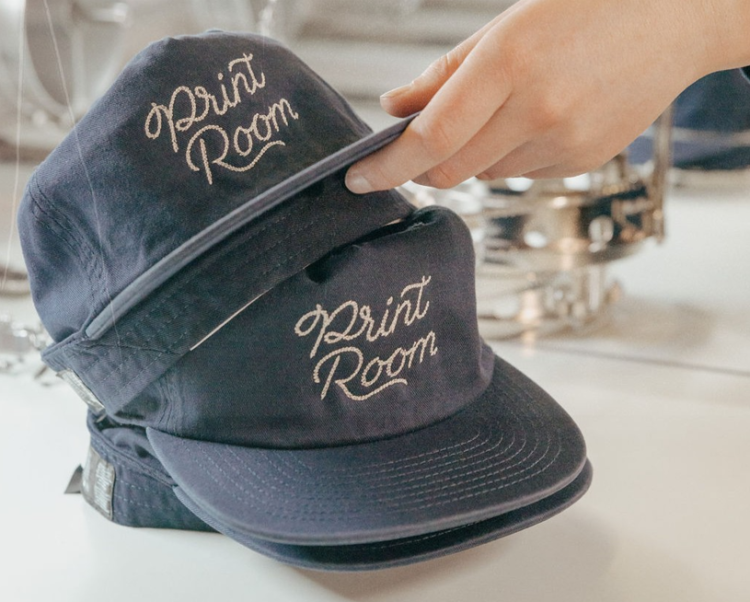
The company now has 16 people working in Dunedin including two in Melbourne and five contracted team members in the Philippines. Its Dunedin production floor is home to embroidery machines, heat presses and two large automatic screen-printing carousels, with pallets of products regularly arriving and leaving.
Despite that growth, Chris says becoming the biggest has never been the goal.
“We’ve never really wanted to be the biggest, but we want to be the best,” he says.
That approach can be seen in the small, sometimes unexpected details. Finished shirts may be wrapped in tissue paper, sprayed with perfume and sealed with custom-branded tape. It’s a retail-style experience applied to an industry not always known for glamour.
The philosophy comes from an early piece of advice about being the “purple cow” - the memorable point of difference in a field of ordinary cows. For The Print Room, that has meant asking how a traditional printing business could look, feel and behave differently.
It has also influenced which products the company is prepared to sell. Chris says the team avoids cheap, low-quality garments and instead helps customers choose merchandise that reflects their brand, feels desirable and will be worn for longer.
“We’re kind of guardians of their brand,” he says.
One of The Print Room’s biggest points of difference is its sustainability ethos – particularly its exclusive use of water-based screen-printing inks.
Most of the industry uses plastisol, a PVC-based ink that is easier to work with. Water-based ink can dry in the screen if the printing process stops, making it technically more demanding. There are also no New Zealand stockists, so The Print Room imports shipments from the United Kingdom. At the time of the interview, another 700 kilograms of ink was on the water. Running out, Chris notes, would be an expensive mistake.
The decision required months of research and overseas travel. Jon and Chris visited specialist printers in the UK, Australia and the US to learn how they worked. Along the way, they formed relationships that have since helped them organise production for customers needing merchandise in international markets.
The harder option ultimately became a defining part of the company’s identity and after several years of effort, it has led to B Corp certification, as well as their long-standing accreditation as a Living Wage certified business.
For Chris, B Corp certification provides an independent stamp of approval and helps attract organisations with similar values. It also reflects the founders’ belief that manufacturing businesses do not have to accept the status quo.
That same willingness to test convention has shaped the company’s expansion beyond Dunedin and they recently established a presence in Australia.
The advice from their business coach was blunt: if they were serious, one of them had to move there.
Jon made the move in January 2026 and now The Print Room supports customers with operations on both sides of the Tasman. Jon believes having a presence in Melbourne has also changed how the company is perceived and helped it win a higher level of client.
Dunedin, however, remains the heart of the business.
The Print Room is now preparing to consolidate stock currently spread across four sites into a purpose-built facility in the city. After moving three or four times during the company’s life, Chris hopes the new building will be home for at least the next decade.
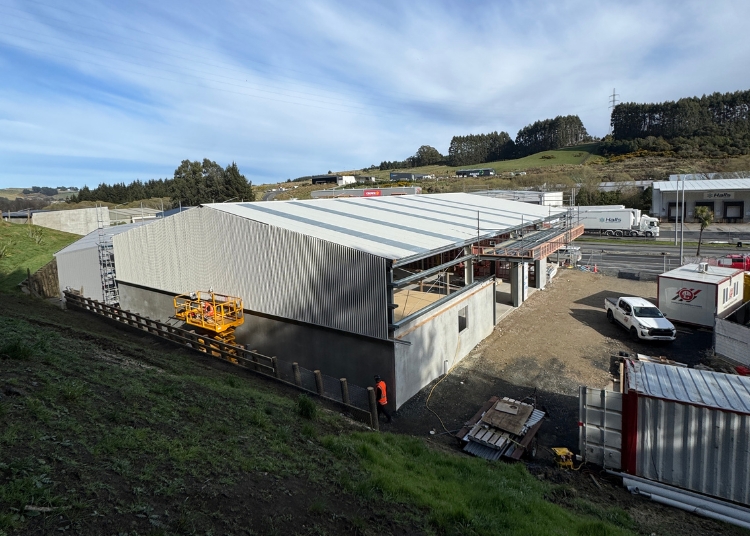
The Print Room's new premises under construction
The founders have helped shape its design, including the use of natural light and considered materials. Owning the property will also give them the opportunity to explore options such as solar power and water harvesting, which were difficult to pursue in leased premises.
Westpac has supported the purchase of the land and construction of the facility, while helping the business prepare for the financial demands of its next stage.
Chris says the banking relationship initially felt unfamiliar. Having grown organically with little borrowing, the founders wondered how much they should share and whose side the bank was on. Over time, the relationship encouraged The Print Room to strengthen its forecasting, cash-flow management and financial systems.
Westpac understood the company’s business model and identified cash flow as a likely pressure point as it expanded. The business has also worked with the wider Westpac team on foreign exchange and trade products.
For a company that began with a homemade press and bakery leftovers, a purpose-built headquarters and a growing trans-Tasman operation might once have sounded unlikely.
But the original spirit remains visible: have clear values that guide you, back yourself, learn quickly and do things differently, even when the easier option is available.
As Chris puts it, the work may technically be manufacturing, but the goal is to put “a bit of love into each job”.