
 Find a branch
 Contact
 Help
Help

Is this the ideal time to buy a home? There's a surplus of property listings, interest rates are at manageable levels, and sellers are having to meet the market with lower prices.
In 2021, the median house price was 9 times the annual median income. It currently costs 6.3 times the annual median income to buy a median house - a significant improvement for buyers.
Across Aotearoa, house prices remain 16.1% below their 2021 peak*, but there’s enormous regional variation. Some areas are much further from their peak, while others are seeing their highest-ever prices (we're looking at you Kaikoura, Westland and Gore).
There are plenty of factors at play, including regional economics, housing supply, and politics.
Some parts of New Zealand look like particularly good buying right now: areas with an oversupply of townhouses, areas with the biggest gap to previous peak value, and areas where existing homes are well priced.
A clever buy now could help you build equity as house price growth turns positive again.
1. Wellington City and Greater Wellington region

Houses in Wellington City are still 25.1% below their peak. Wellington’s property market is uniquely tied to politics: house prices and rents tend to ebb and flow in line with government spending. Right now, the government is tighter on hiring and spending, and property values reflect this. If economic patterns repeat, prices are likely to rise when the government opens up its giant wallet.
What’s happening in Wellington ripples into the surrounding areas, and house prices in most of the lower North Island remain below peak. Upper Hutt and Lower Hutt are down 23.9% and 24.8%, respectively, and in Porirua they’re down 21.9%.
Wellington is consistently one of the highest-earning areas of New Zealand, with an average household income of nearly $169,000 in the year to March 2025. Both Upper and Lower Hutt have household incomes above the national average (around $145,000 compared to the nationwide average of $135,000), while in Porirua it’s a healthy $166,000. This suggests that if you have a secure job in Greater Wellington, this might be the perfect time to buy a house.
Wellington has lots of newly built townhouses, so you can buy a new or near-new three-bedroom house for under $800,000. In Lower Hutt, new three-bedroom townhouses are available for around $600,000, and a bit more in Upper Hutt. It costs around $3,000 per square metre to build a townhouse, putting a 150m2 townhouse at $450,000 to build. With a section in the Hutt likely to cost you around $300,000, these townhouses look like relatively good value.
In Porirua, existing homes are more than 10% cheaper than new ones, so if you have the patience and budget for a full renovation, you could potentially create a decent chunk of equity.
Or avoid an older house and plump for something newer. In Whitby, for example, a three-bedroom 2020 townhouse was listed for around $670,000 in July. With sections in Whitby closer to $300,000, it would be hard to build for this price.
2. Whangarei

With 21% of residents aged 65-plus, Whangarei households have a relatively low median income of $109,000. House prices remain 17.7% below peak, and there are some attractive deals to be found.
A five-year old home in One Tree Point for $950,000 on 600m2 is appealing, right by the marina, given that a larger, but less favourably positioned section nearby is ‘enquiries over’ $625,000. This is an area where careful buying could reward you handsomely when prices start rising again.
3. Christchurch
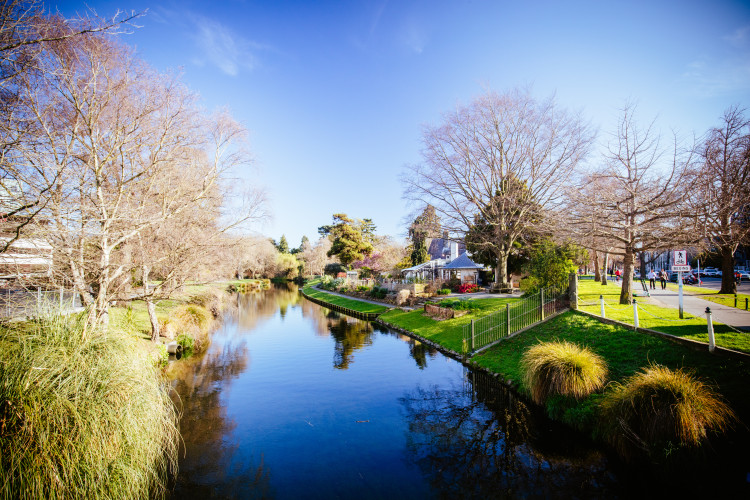
While prices are only 4.5% below peak, the oversupply of townhouses may still offer opportunities for savvy buyers. BRANZ estimates that the Canterbury region has a surplus of around 455 homes, compared to a nearly 10,000 shortfall in Auckland. Christchurch was named ‘townhouse capital of NZ’ late last year, with reports that some two-bedroom townhouses were being sold for $200,000, or 25% less than their purchase prices.
All this adds up to fantastic buying, given how fast the city is growing in popularity. In July, you could find near-new central three-bedroom townhouses starting from around $650,000. And with sections near the city starting from $350,000, you couldn’t build it for that.
4. Outer Auckland
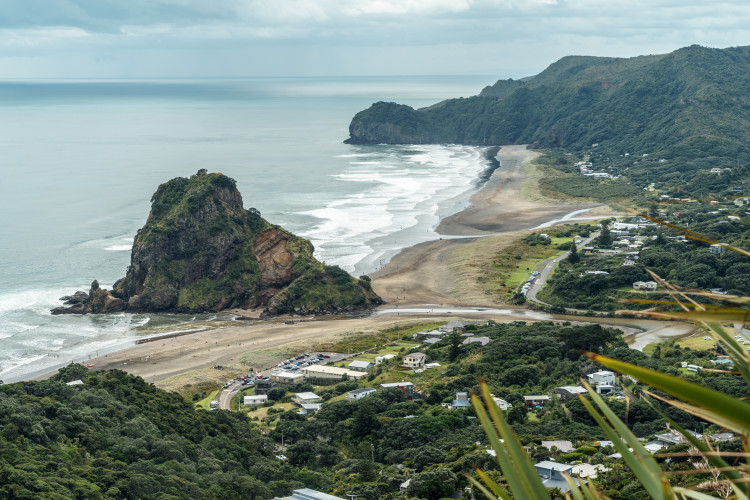
As a whole, Auckland’s house prices remain 20.9% down on peak, with Waitakere (-23.5%), Papakura (-22.8%) and Manukau (-22.1%) seeing the biggest declines. These areas have all seen substantial development in recent years, causing an oversupply in townhouses, which has been blamed for the city’s house price slump. Because Auckland is by far the most common destination for new migrants to settle, the fall in immigration has also dented demand in the super city. Could you buy now before the recovery leads to house price rises?
If you’re house-hunting in west and south Auckland, you’re in an excellent position to negotiate. Near-new homes are selling for less than you could build them. For example, in July a 200m2 section in Flatbush was priced at around $500,000, but you could buy a two-year-old three-bedroom townhouse in the same suburb for $715,000. That feels like superb buying considering you almost certainly couldn’t build a three-bedroom home for less than $300,000.
5. Nelson City
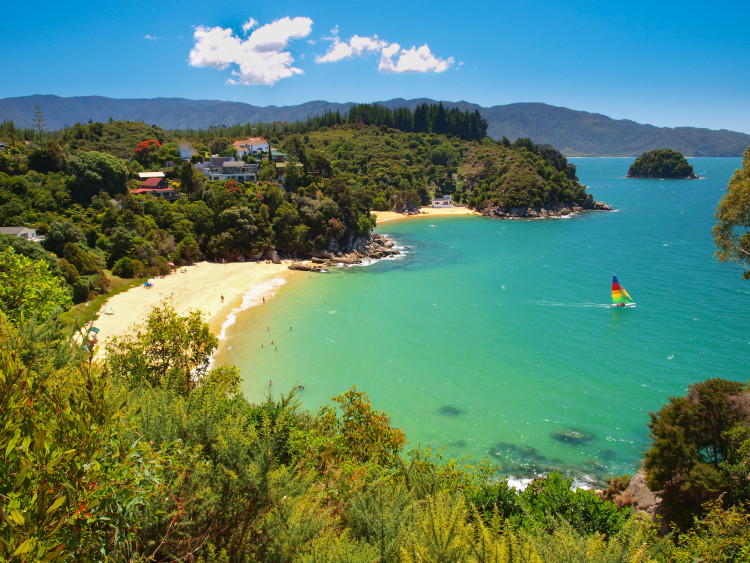
Nelson is generally quite expensive considering that household average incomes are on the low side, at just over $100,000 – but that is partly due to the high proportion of retirees. What’s interesting is that Nelson’s new properties sell for a sizeable 20% margin above existing properties ($823,000 vs $684,000). This suggests that people are happy to pay for a home that’s ready to move into and requires no work, so there’s potential to create equity with a cost-effective renovation.
Down 12.3% from peak, the local market is generally fairly strong. However, if you can find the right do-up and a keen tradie to get the work done at a sharp price, there’s an opportunity here.
Run your own numbers
Every property is unique, so whether it’s a bargain will depend a lot on your priorities and budget. Make sure you do your market research before you buy, so you know what great value buying looks like for you and your household.
**Data sources: Difference from peak data as at 30 June 2025, supplied by Cotality. Gap between new and existing build data based on sales for 12 months to June 2025, supplied by Cotality.